Reply speed matters, reply quality matters more
A thoughtful response posted within 24 hours beats a rushed one in 2 hours every time. Take the time to understand the full thread before drafting.

Your brand's reputation is shaped by what people say when you're not in the room. On Reddit and X, those conversations happen daily — and they're searchable forever. This guide covers how to monitor, protect, and improve your brand reputation across the platforms that matter most.
By Carter Wang, Founder · Published September 6, 2026
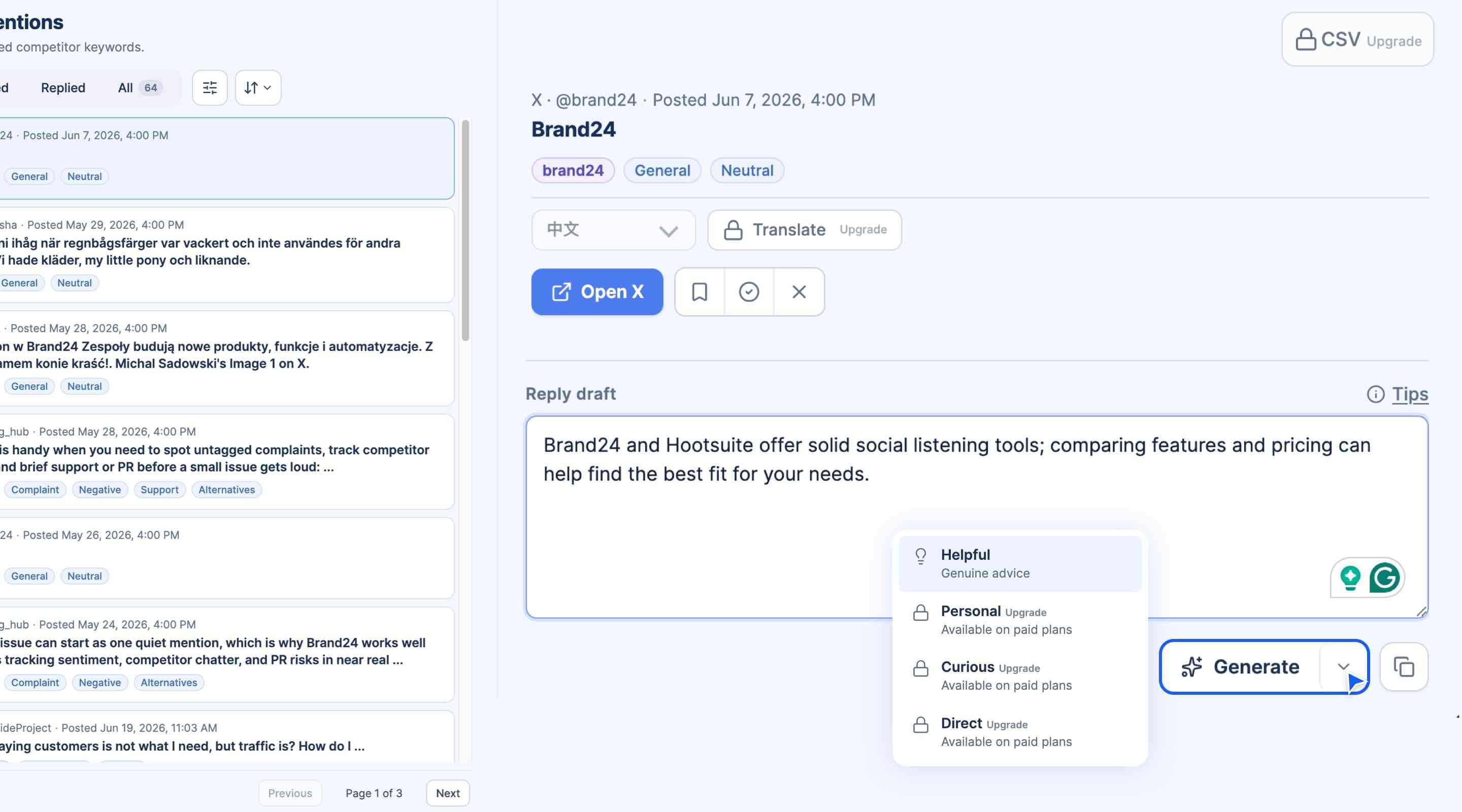
Brand monitoring tells you who's talking about your product. Reputation monitoring tells you whether those conversations are helping or hurting you, and whether you have the opportunity to shape the narrative before it solidifies. A brand can have high mention volume and a deteriorating reputation — and without reputation monitoring, management only finds out when revenue dips. On Reddit, a single critical thread about your product can rank on Google for years. On X, a negative experience can go viral in hours. Reputation monitoring catches these moments early — when a reply can still influence the conversation's direction — rather than discovering them after they've been indexed and shared thousands of times.
Start with the obvious: your brand name, product name, and founder name. Add common misspellings — people don't always spell things right. Then expand outward. Industry terms and category keywords matter because people often discuss brands without naming them directly ("this CRM is terrible" instead of "Salesforce is terrible"). Layer in competitor names too. Comparison threads are where your reputation gets shaped relative to alternatives, and you want visibility into those conversations. For a complete guide on tracking and acting on competitor mentions, see our competitor monitoring guide.
The difference between a handled complaint and a reputation crisis often comes down to hours, not days. A negative Reddit post with 3 upvotes and no replies is manageable. The same post with 300 upvotes and 50 comments is a different challenge entirely. Speed of detection determines speed of response. This is why timing matters more than perfection. A thoughtful response posted within 24 hours beats a rushed one in 2 hours every time. Take the time to understand the full thread before drafting.
The worst response to a negative mention is a defensive one. The second worst is silence. The best approach sits in between: acknowledge the specific concern, share what you're doing about it (if anything), and offer a path forward. On Reddit, users track whether brands show up honestly — a brand that only appears to defend itself gets called out. A brand that consistently adds value gets the benefit of the doubt when things go wrong. One SaaS company faced a wave of negative Reddit threads after a pricing change. Instead of ignoring the criticism or posting corporate statements, their team replied to individual threads with specific explanations tailored to each user's concern — no templates, no copy-paste. Within two weeks, follow-up threads began referencing those replies positively, and the narrative shifted from "they're greedy" to "they explained why." The lesson: build a response playbook based on principles, not templates. Acknowledge specifically. Explain honestly. Offer constructively. Apply those principles to each situation rather than copying text.
Reputation monitoring works best as a proactive habit, not a reactive panic button. Brands that consistently appear in helpful, informative discussions build a reservoir of goodwill. When a negative thread does appear — and one always will — that existing goodwill cushions the impact. When a competitor faces criticism, comparison threads often spike. These are opportunities to join conversations where buyers are actively reevaluating — not by attacking the competitor, but by sharing what makes your approach different.
A thoughtful response posted within 24 hours beats a rushed one in 2 hours every time. Take the time to understand the full thread before drafting.
When a competitor faces criticism, comparison threads often spike. These are opportunities to join conversations where buyers are actively reevaluating — not by attacking the competitor, but by sharing what makes your approach different.
Pre-written templates feel pre-written. Instead, build a playbook of principles: acknowledge specifically, explain honestly, offer constructively. Apply the principles to each situation rather than copying text.
Social listening tracks what people say about your brand across platforms. Reputation monitoring focuses specifically on conversations that affect how your brand is perceived — product complaints, comparison threads, pricing criticism, and competitor comparisons — and prioritizes the ones that need a response to protect or improve your standing.
PR monitoring focuses on media coverage, journalist mentions, and press sentiment. Reputation monitoring focuses on community discussions — Reddit threads, X conversations, and forum posts where everyday users shape brand perception without the filter of a publication's editorial standards.
Within 24 hours for most negative mentions. Within 2–4 hours if the mention is gaining traction (upvotes, comments, retweets). The key is to acknowledge before the thread spirals — a brief 'we're looking into this' buys you time to craft a more detailed response.
No. Prioritize based on engagement and reach. A negative post with 50+ comments in a relevant subreddit deserves a response. A one-off complaint with no engagement can be tracked for sentiment trends but doesn't need a direct reply. Use sentiment tags and engagement signals to decide what to answer first.
Yes. SignalMelo's unified inbox shows brand mentions, competitor mentions, and sentiment tags all in one place. Reputation monitoring is a lens you apply to your existing monitoring workflow — not a separate tool or process.