Tie every research report to a decision
Before running a report, ask: 'What decision will this inform?' Research without a decision context rarely leads to action.

Community discussions on Reddit and X contain unfiltered data about what buyers want, what frustrates them, and what they wish existed. This guide covers how to turn community discourse into structured brand research — without surveys, focus groups, or expensive market research firms.
By Carter Wang, Founder · Published September 6, 2026
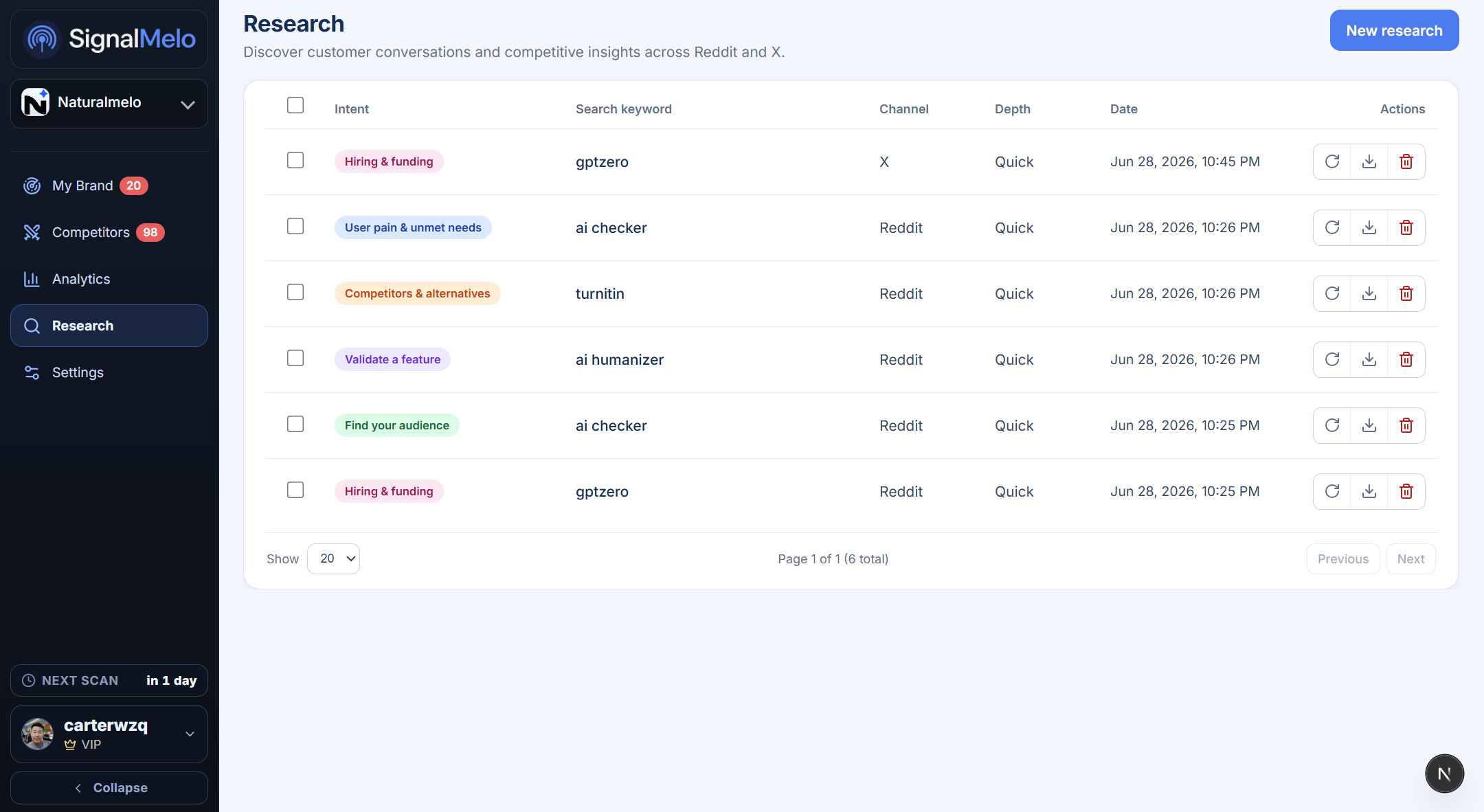
Traditional brand research leans on surveys, focus groups, and analyst reports. They're expensive, slow, and prone to response bias. People tell a researcher one thing and then spill what they really think in a Reddit thread at 11 PM. Community discourse research captures what buyers say to each other, unprompted. Social listening dashboards count mentions and chart sentiment. Community research does something different: it pulls patterns from dozens or hundreds of posts into one structured readout — which pain points keep coming up, which alternatives buyers compare, and which features they ask for most.
Not all community research asks the same question. Different business needs call for different research angles. SignalMelo's Research feature supports five research intents, each designed to answer a specific strategic question.
The gap between 'monitoring mentions' and 'doing research' is synthesis. A monitoring inbox shows you 50 individual posts about your category. Research turns those 50 posts into a structured report: a summary of key patterns, evidence-backed findings with linked sources, and hypothesis drafts you can test with your team.
The best research workflows attach to real decisions, not a calendar. Run a competitor gap report before a pricing review. Run a feature validation report before sprint planning. Run a user pain report before a positioning workshop. We've noticed that research tied to an immediate decision gets used — research that just sits in a folder doesn't. One product team used community research to validate demand for a feature they had deprioritized. After finding 18 Reddit threads in three months where users explicitly requested that capability, they moved it to the current quarter. Within two months of launch, they saw a 15% lift in trial-to-paid conversion.
Monitoring is operational. It answers 'what is happening right now' and surfaces threads worth replying to. Research is strategic. It answers 'what patterns are emerging' and produces insights worth sharing with your leadership team. Both use the same data sources — Reddit and X discussions — but serve different goals. Monitoring handles daily and weekly mention reviews. Research reports handle quarterly strategic questions. Together they close the loop from detection to insight to action.
Before running a report, ask: 'What decision will this inform?' Research without a decision context rarely leads to action.
When sharing research findings with your team, include a one-paragraph summary of why this matters now and what you recommend doing with the insight.
Save reports by topic and revisit them quarterly. Patterns that were invisible in one report often become clear when you compare three reports on the same keyword over six months.
Social listening counts mentions and tracks sentiment. Community research synthesizes patterns across posts into structured reports with evidence, hypotheses, and linked sources. It is the difference between a dashboard and a strategy document.
SignalMelo Research analyzes discourse from Reddit and X — the two platforms where the highest-intent B2B and consumer conversations happen. Each finding links back to the original post so you can verify context before acting on insights.
Most research reports are ready within a few minutes. Quick depth reports (Starter plan and above) focus on synthesis and key evidence. Deep depth reports (Pro and VIP) include extended analysis with hypothesis drafts and gap analysis.
Research runs against the same brand keywords you already track for monitoring — no separate keyword setup needed. This keeps your monitoring and research aligned so insights connect directly to what you are already watching.
Quarterly for strategic questions (competitive positioning, product roadmap). Monthly for tactical questions (feature validation, content strategy). Ad-hoc when a specific business decision requires community evidence.